Why Buy A Luxury Home When You Can Rent It

Why renting a luxury home in Toronto can be smarter than buying.
Conventional wisdom dictates that when it comes to residential property, you are always better off buying than renting. The traditional narrative is simple - renting is throwing money away, while buying allows you to build equity in an asset that will eventually be yours.
However, the financial calculus changes dramatically when you move from conventional real estate to the luxury market. When analyzing ultra-premium condominiums and high-end estates, the standard rulebook no longer applies.
The real estate landscape in major metropolitan areas has undergone a massive structural shift. High borrowing costs paired with a significant influx of premium inventory have altered the economics of high-end living. Today, the question must be asked with fresh analytical rigour - Are there distinct financial, operational, and lifestyle advantages to renting a luxury home instead of buying one?
The short answer is yes. For a growing class of high-net-worth individuals, executives, and modern professionals, renting luxury real estate has evolved from a temporary compromise into a deliberate, strategic wealth-management choice.
The Luxury Real Estate Equation - How High-End Properties Change the Math
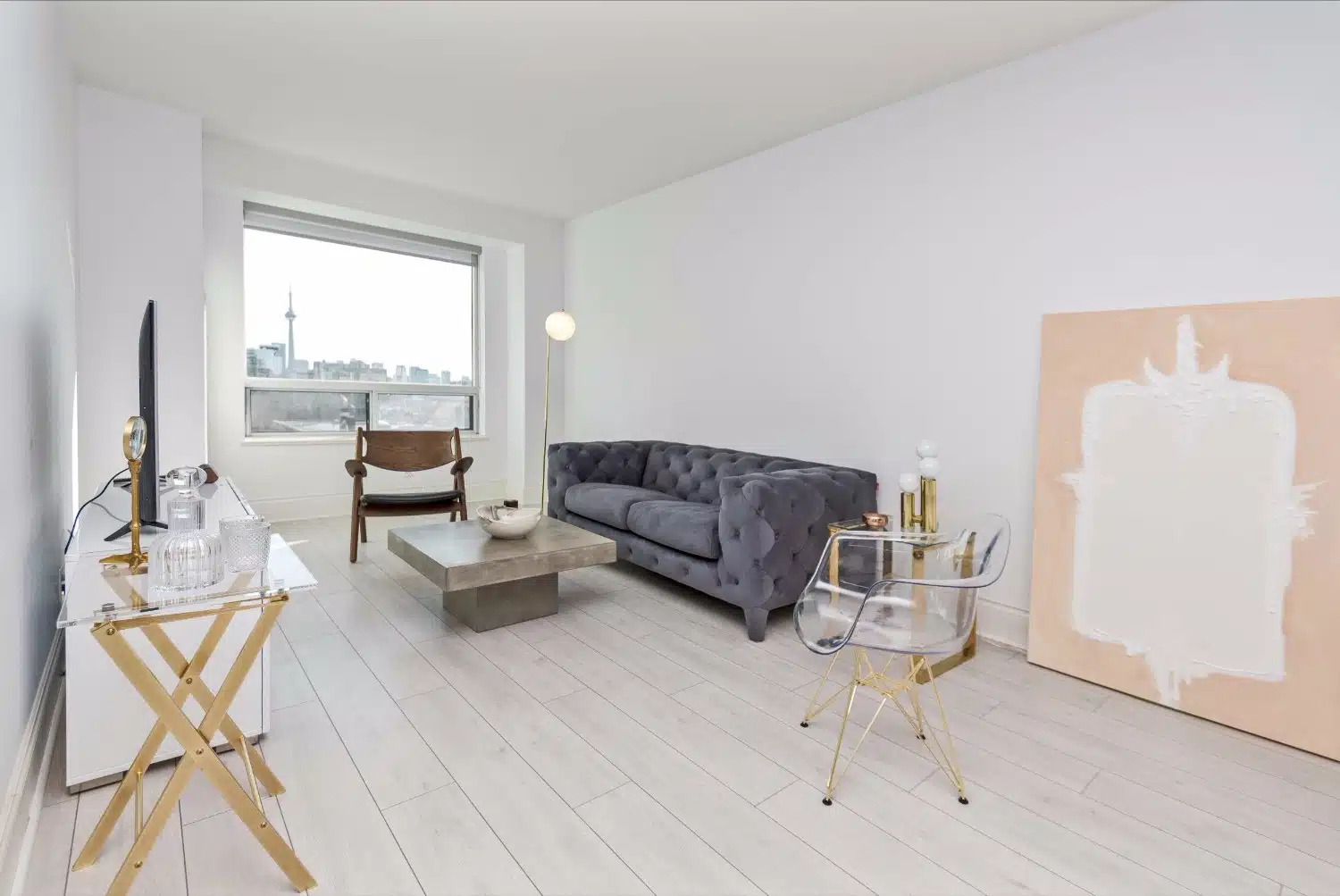
To understand why buying a luxury home can be a counterproductive financial move, you must look at how the entry-level or average housing market differs from the premium tier.
The Conventional Market vs. The Luxury Tier
For a standard, median-priced residential property, buying frequently beats long-term renting. The carrying costs (maintenance, property taxes, insurance) are relatively low, and the property serves as a stable, long-term forced savings mechanism. If you plan to stay in an average home for more than five years, taking out a mortgage generally makes sense; upon leaving, you can sell or convert it into a cash-flowing rental asset.
In the luxury segment, this equation breaks down completely due to three primary macroeconomic pressures:
[Luxury Purchase Cost] = High Down Payment + Sunk Transaction Taxes + Exorbitant Carrying Costs + Illiquidity Risk
- The Carrying Cost Multiplier - Luxury properties do not just cost more to buy; they cost disproportionately more to hold. High-end mechanical systems, smart-home automation, concierge services, and premium finishes require specialized, expensive upkeep.
- The Asymmetry of Appreciation - Ultra-luxury properties are highly illiquid assets. While entry-level homes see consistent demand from a large pool of buyers, the buyer pool for a multi-million-dollar home is tiny. Consequently, luxury home values face higher volatility and can sit on the market for months or years before finding a buyer.
- The Sunk Cost Trap - Purchasing a luxury property requires massive, unrecoverable upfront capital outlays, such as premium land transfer taxes and legal fees, that require years of aggressive property appreciation just to break even.
1. Capital Preservation and Lower Upfront Barriers
Purchasing a piece of luxury real estate requires an immediate, massive deployment of liquid capital. Renting completely bypasses this cash drain, preserving your capital for high-yield allocations.
Erasing the Down Payment Burden
In Canada’s competitive premium markets, purchasing a luxury home requires a massive down payment, frequently 20% or higher for properties valued over $1 million, where federal mortgage insurance is unavailable. On a $3 million premium property, that means locking up $600,000 in raw cash just to secure the mortgage.
When renting a high-end property, your upfront capital requirement is typically limited to the first and last month’s rent, leaving your core net worth entirely unencumbered.
Eliminating Sunk Transaction Costs
The hidden friction of buying luxury real estate lies in unrecoverable transaction fees. In regions with layered tax structures, like Toronto, buyers face both provincial and municipal land transfer taxes. For a luxury home purchase, these taxes alone can easily reach tens of thousands of dollars.
Consider the friction points bypassed entirely when choosing a luxury rental:
- Land Transfer Taxes - Often hitting 4% to 5% of the total purchase price in double-tax zones.
- Legal and Escrow Fees - Premium properties require complex title searches, corporate structures, and extensive legal oversight.
- Rigorous Inspection Costs - Verifying the structural and mechanical integrity of an expansive estate or custom penthouse requires specialized engineering firms, costing thousands of dollars per inspection.
When you rent, these entry fees disappear. Your liquid net worth remains intact on day one, rather than dropping instantly due to transaction friction. To learn more about standard regional rental regulations and tenant protections that keep your lease secure, you can explore resources like the Landlord and Tenant Board (LTB), which outlines legal frameworks for tenancy.
2. Zero Maintenance, Upkeep, or Repair Liabilities
The most immediate operational advantage of renting a luxury property is the complete elimination of maintenance headaches and unexpected repair bills.
Standard Real Estate Maintenance Rule - Budget 1% to 2% of the property's total value annually for ongoing upkeep.
On a conventional $500,000 home, an annual maintenance budget of $5,000 to $10,000 is manageable. But apply that exact same mathematical rule to a $4 million luxury property, and you are looking at $40,000 to $80,000 every single year just to keep the property in its prime state.
The True Cost of High-End Specialization
Luxury homes feature highly complex architectural and mechanical components. When these systems require service, you cannot call a standard handyman. You are on the hook for specialized technicians and premium components:
Feature / System
Common Maintenance / Repair Issue
Estimated Luxury Owner Out-of-Pocket
Renter Cost
Commercial HVAC / Climate Control
Multi-zone VRF system failure or compressor swap
$15,000 - $35,000
$0
Custom Pool & Spa Infrastructure
Automated salt-water filtration or heater overhaul
$5,000 - $12,000
$0
Smart-Home Automation (Crestron/Lutron)
System-wide software bricking or hardware upgrades
$8,000 - $20,000
$0
Curated Exterior / Landscaping
Seasonal masonry repair, living walls, and expert care
$10,000+ annually
$0
Protecting Your Time
Beyond the direct financial costs, managing luxury property maintenance demands substantial time and logistics. Coordinating specialized contractors, overseeing multi-week structural repairs, and managing emergency capital fixes can quickly turn homeownership into a demanding second job.
For high-earning professionals, entrepreneurs, and busy executives, time is a finite, high-value asset. Renting converts all property maintenance into a single, frictionless action - sending a text or portal request to a professional landlord or property management company. If a water line cracks or a custom appliance breaks down at 2:00 AM, the logistical and financial responsibility falls squarely on the owner, leaving your schedule and capital completely untouched.
3. Retaining Uncompromised Access to Premium Amenities
A common misconception is that by renting, you receive an inferior or restricted lifestyle experience. In the modern luxury market, this could not be further from the truth.
Renting a luxury property grants you full legal right-of-use to every premium amenity integrated into the home or building design. You enjoy the complete lifestyle experience without taking on the massive capital expenditure required to design, construct, and maintain those spaces.
Turnkey Access to Lifestyle Features
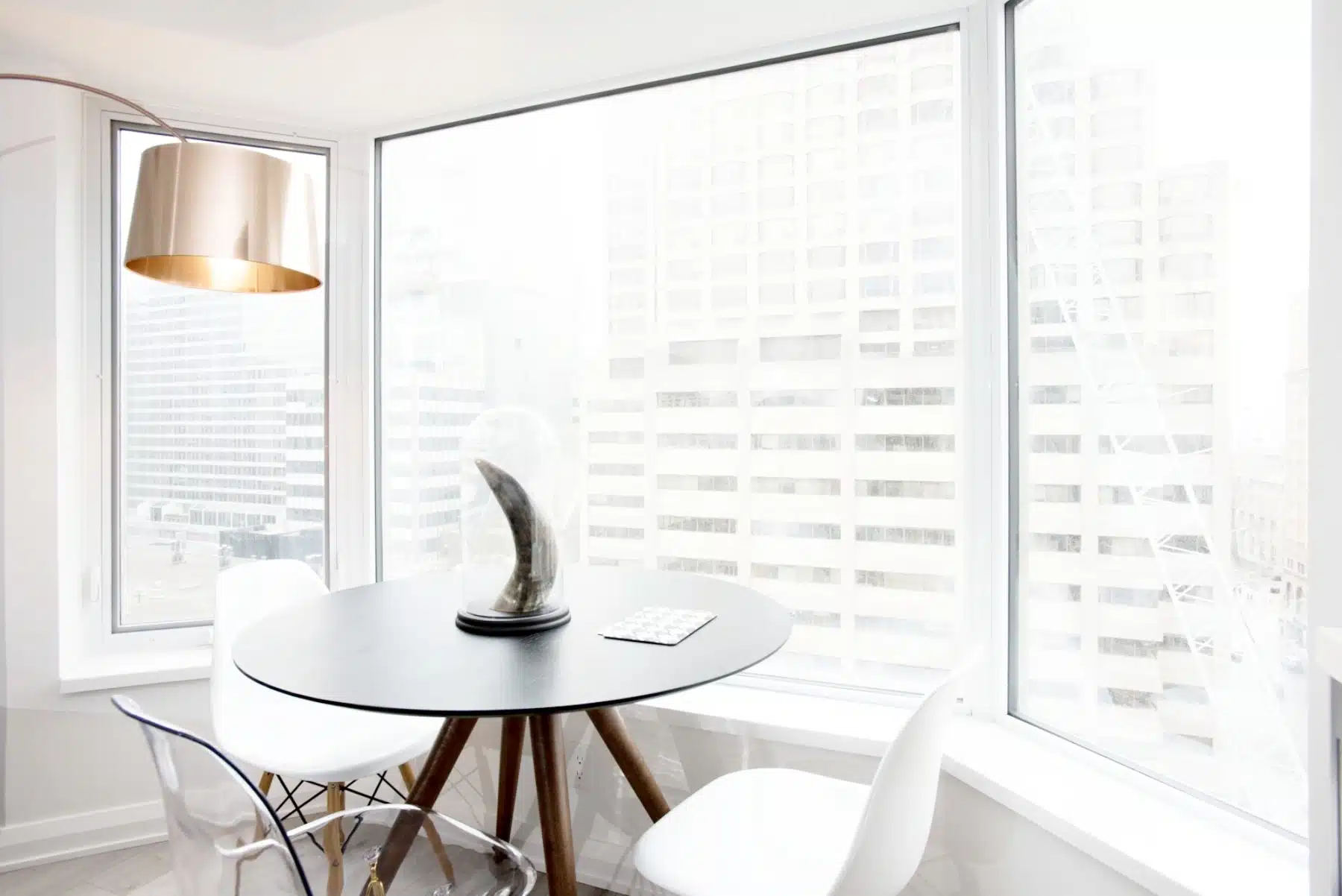
When you move into a curated luxury rental, you gain immediate access to a suite of highly desirable amenities:
- Private Fitness Centres & Spas - State-of-the-art gyms equipped with high-end cardio gear, dedicated yoga studios, infrared saunas, and steam rooms.
- Entertainment Suites - For example, a furnished suite in Yorkville will haveacoustically treated private screening rooms, wine tasting cellars with climate-controlled storage, and presentation kitchens for private chefs.
- Elite Security & Service - 24/7 dedicated concierge teams, secure package management, biometric security access, and private underground parking garages.
Building a private spa, wine cellar, and gym can add $250,000+ to construction costs, plus perpetual energy and service expenses. Renting delivers this entire ecosystem on your move-in date.
This dynamic allows you to live efficiently. You consume the lifestyle utility of these premium spaces through your standard monthly payment, bypassing the steep construction debt, design delays, and ongoing operational overhead that homeowners must carry.
4. Bypassing Hefty Property Taxes and Regulatory Overhead
Owning premium real estate means entering a long-term partnership with municipal and provincial tax authorities, and the tax bills on luxury properties can be staggering.
The Realities of Luxury Property Taxes
Property tax assessments are directly linked to the fair market value of the real estate. In major metropolitan areas, even a modest annual municipal tax rate can translate into an immense absolute expense when applied to multi-million-dollar valuations.
For instance, a premium property assessed at $3.5 million can carry annual property tax liabilities ranging from $20,000 to over $45,000, depending on the exact municipal jurisdiction. This is not equity building; it is a permanent, non-recoverable annual cash drain.
Property Taxes + Luxury Condo Fees + Commercial Insurance Premium = Significant Monthly Dead Money.
Navigating Special Assessments and Strata Levies
If your luxury home is a high-rise penthouse or part of an exclusive master-planned community, you will also face steep monthly condominium or strata fees. These fees cover building staff, common area maintenance, and amenity operations, often running between $1,500 and $3,500+ per month for luxury footprints.
Worse yet, luxury condo owners face the risk of Special Assessments. If the building's parking garage requires urgent structural reinforcement or the premium glass facade fails, the condo corporation can levy a mandatory, lump-sum fee on all owners to cover the shortfall. These assessments can easily top $50,000 to $100,000 per unit.
As a renter, you are legally insulated from these surprise corporate liabilities. Your financial exposure is tightly capped by your lease agreement, shielding your personal balance sheet from unexpected municipal or structural tax shocks.
5. Opportunity Cost - The Power of Strategic Capital Allocation
The strongest argument against buying luxury real estate is rooted in the concept of opportunity cost. Sinking a large portion of your net worth into a single, highly illiquid physical asset prevents you from compounding that money in more efficient, liquid, and higher-yielding investment vehicles.
Sunk Capital vs. Active Portfolios
Let’s look at a practical financial comparison. Suppose you have $750,000 in liquid capital ready to deploy. You are evaluating two paths:
- Path A (The Buyer) - You use the entire $750,000 as a down payment and to cover closing costs on a $3.2 million luxury condo. You lock up your capital in a single piece of real estate, take on a massive multi-million dollar mortgage, and take on full liability for interest payments, property taxes, and maintenance.
- Path B (The Strategic Renter) - You choose an exceptional luxury rental. You keep your $750,000 fully liquid and invest it into a diversified portfolio, such as broad-market global equities, private equity, private credit, or expand your own cash-flowing business.
Historically, global equity indexes and private business investments have delivered average long-term returns that comfortably outpace residential real estate appreciation, especially when real estate carrying costs and mortgage interest are factored in. By renting, you avoid concentrating your net worth in a single asset class and location, keeping your capital nimble and positioned for rapid growth.
The Dead Money Reality of Early Mortgage Payments
Many buyers look at their monthly mortgage statement and assume the entire check builds wealth. However, in the initial years of a large luxury mortgage, the vast majority of your monthly payment goes toward mortgage interest, property taxes, and condo fees.
Financial Reality Check - During the first 5 to 10 years of a high-value mortgage, a significant portion of your monthly cash flow is spent on non-recoverable carrying costs. On a pure cash-flow basis, renting a similar luxury property often costs significantly less per month than the non-equity carrying costs of owning it, allowing you to invest the difference every month.
To evaluate real-time pricing discrepancies, median rental shifts, and current inventory trends in major metropolitan areas, check out tracking platforms like PadMapper to compare localized luxury rental benchmarks.
6. Frictionless Mobility and Protection from Real Estate Market Risk

The modern economy rewards agility. Tying yourself to a multi-million-dollar asset can severely limit your personal freedom and career trajectory.
Flawless Global and Career Mobility
A luxury home purchase is a long-term commitment. Due to steep transaction entry and exit costs, you typically need to hold a premium property for at least 5 to 7 years just to break even on the transactional friction. If your career moves fast, if you operate a global business, or if your family dynamics evolve, a purchased luxury home can quickly become a golden handcuff.
[Average Days to Sell a Standard Home - 20-40 Days] vs. [Average Days to Sell a Luxury Home - 90-180+ Days]
If you need to relocate to another country or city for an exceptional venture capital opportunity or executive placement, selling a luxury property can take months of staging, marketing, and price negotiations.
When you rent a luxury property, your exit is completely clean and predictable. Once your lease term concludes, you can pack your belongings, give proper notice, and transition to your next global destination without leaving behind a massive real estate liability.
Insulating Yourself from Market Downswings
Real estate markets operate in cycles. When luxury property values face downward pressure due to changing economic conditions or shifts in supply, homeowners absorb 100% of that asset depreciation on paper. If a homeowner is forced to sell during a market correction, those paper losses turn into permanent, devastating capital destruction.
As a renter, you carry zero real estate asset risk. If property values in your luxury building or neighbourhood drop by 15%, your personal net worth remains completely unaffected. In fact, a softer market can work in your favour, giving you increased leverage to negotiate lower monthly rent or secure valuable move-in incentives when your lease comes up for renewal.
Frequently Asked Questions (FAQs)
1. Isn't renting luxury real estate just throwing money away compared to buying?
In the luxury segment, this traditional narrative breaks down. During the initial 5 to 10 years of a high-value mortgage, the vast majority of your monthly cash flow goes toward non-recoverable carrying costs, such as mortgage interest, steep property taxes, and luxury condo fees. Because luxury properties require a massive cash down payment (often 20% or more) and come with high transactional friction, renting often keeps your monthly out-of-pocket costs lower while freeing up large amounts of liquid capital to compound in higher-yielding investments.
2. How much can I expect to save on maintenance when renting a luxury home?
As a renter, your maintenance liability is exactly $0. For luxury homeowners, the standard real estate rule of budgeting 1% to 2% of the property's value annually for upkeep translates to massive figures. On a $3 million property, that means an owner is spending $30,000 to $60,000 every single year out of pocket to service complex multi-zone HVAC systems, smart-home automation setups, pools, and high-end finishes. Renting shifts 100% of these financial and operational logistical headaches to the landlord.
3. Do luxury rentals give me access to the same amenities as owners?
Yes. When you sign a lease for a luxury property, you gain full, equal legal right-of-use to every premium amenity integrated into the building or estate. This includes 24/7 dedicated concierge services, elite fitness facilities, spas, saunas, wine-tasting rooms, and private screening theatres. Renting allows you to fully enjoy this high-end lifestyle ecosystem on day one without taking on the debt, construction delays, or ongoing operational overhead required to build it.
4. What are the tax advantages of renting luxury property over purchasing it?
Purchasing a luxury home immediately exposes you to significant unrecoverable tax liabilities. Buyers face immediate, heavy upfront costs like Land Transfer Taxes (which can hit 4% to 5% in double-tax zones like Toronto) and legal fees. Furthermore, owners must pay ongoing municipal property taxes that scale with multi-million-dollar valuations, often costing $20,000 to $45,000+ annually. Renters are legally insulated from these municipal tax drains and are shielded from expensive building-wide Special Assessments.
5. What is the minimum lease term for a luxury rental at Toronto Boutique Apartments?
While traditional real estate purchases lock you down for years to break even on transaction costs, Toronto Boutique Apartments (TBA) specializes in flexible mid-to-long-term luxury leases. Our executive party-style suites and designer residences cater to modern corporate relocations, temporary professional placements, and changing lifestyle timelines. This allows you to experience premium urban living with a highly flexible exit strategy, completely eliminating market risk and the friction of selling an illiquid asset.
Toronto Boutique Apartments (TBA) - Luxury Rentals Redefined
If you are ready to embrace the financial freedom, operational simplicity, and dynamic lifestyle of high-end renting, Toronto Boutique Apartments (TBA) offers an uncompromised solution.
We provide an exclusive, curated portfolio of premium, professionally managed luxury suites situated in Toronto's most desirable downtown enclaves. Whether you require an executive penthouse for a short-term corporate stay or a beautifully designed multi-bedroom residence for long-term living, TBA delivers an elite residential experience without the friction of homeownership.
Why Discerning Renters Choose TBA:
- Designer-Curated Spaces - Our properties feature premium finishes, custom furnishings, high-end appliance suites, and intentional architectural layouts designed for modern living.
- Turnkey Executive Living - Move in with total peace of mind. Every suite features high-speed enterprise Wi-Fi, fully equipped custom kitchens, in-suite laundry, and seamless smart-home tech integrations.
- Unrivalled Corporate and Personal Flexibility - Skip the rigid, multi-year commitments of traditional real estate. TBA specializes in premium mid-to-long-term flexible leases tailored to your precise personal and professional timeline.
- Five-Star Professional Management - Experience a truly hands-off living experience. Our dedicated guest services and property management teams handle every operational detail, maintenance request, and building coordination on your behalf.
Don't lock up your valuable liquid capital in an illiquid, high-overhead asset. Maintain your financial agility, optimize your investment portfolio, and experience the pinnacle of urban luxury living on your own terms.
Contact the reservation team at Toronto Boutique Apartments today to explore our exclusive collection of available premium suites and find your next turnkey home.
Furnished monthly rentals Toronto · Search availability · View this page