The Ultimate Guide To Student Rentals In Canada

Everything students need to know about renting in Canada, from leases to budgeting.
Tab 1
The Canadian rental market in 2026 is a vastly different experience from what it was just a few years ago. As we balance a historic high in student enrollment with a fresh wave of newly completed housing supplies, the landscape has shifted from a pure shortage to a strategic hunt.
For many newcomers, finding apartments for students in Canada can still feel like a gruelling full-time job, often complicated by rising costs in major urban hubs and the overwhelming speed of the market.
However, there is a silver lining - 2026 marks a significant turning point with a record number of purpose-built student housing (PBSH) projects finally coming online. This influx of supply is beginning to provide much-needed relief and more tailored options for those seeking rent for international students in Canada.
Whether you are eyeing the high-rises of Downtown Toronto or the historic streets of Montreal, this guide serves as your comprehensive roadmap, covering real-time costs, essential legal rights, and localized hacks to secure your home away from home.
Types of Student Accommodation in Canada
Choosing the right roof over your head is the most critical decision you’ll make after picking your university. In Canada, the options generally fall into four distinct categories, each catering to different budgets and lifestyle needs.
On-Campus Residences - The Classic Dorm Life
Ideal for first-year students, living on campus offers unparalleled proximity to classes. In 2026, typical pricing ranges between $800 and $1,200 per month, often bundled with meal plans. While the convenience is high, the cons include limited privacy and the fact that most residences close during winter or summer breaks, forcing international students to find alternative housing.
Off-Campus Shared Accommodations
This remains the most popular way to minimize room rent for students in Canada. By renting a private bedroom within a larger house or apartment, you split the costs of internet, hydro, and heat. In cities like Edmonton or Winnipeg, you might find rooms for $700, whereas in Downtown Toronto, expect to pay $1,100+. It’s a great way to build a social circle quickly.
Private Apartments & Basement Suites
For those seeking total independence, houses for rent in Canada for students often feature secondary basement suites. These are self-contained units with their own kitchens and bathrooms. Alternatively, high-rise condos offer modern amenities like gyms and 24/7 security, though they come with a higher price tag and require more rigorous credit checks.
Luxury & Boutique Student Housing
A rising trend in 2026 is the professionalized student stay. Moving beyond the starving student trope, many are opting for professionally managed, furnished apartments in Downtown Toronto to bypass the stress of buying furniture and setting up utilities. These boutique options offer a soft landing for international students, providing move-in-ready executive suites in the heart of the city.
Top-Tier Apartments for Students in Canada - Featured Picks
If you are looking for the gold standard in student accommodation in Toronto, these five options offer the perfect blend of proximity to campuses (UofT, TMU) and premium urban living:
Bay And College Luxurious Furnished Suite
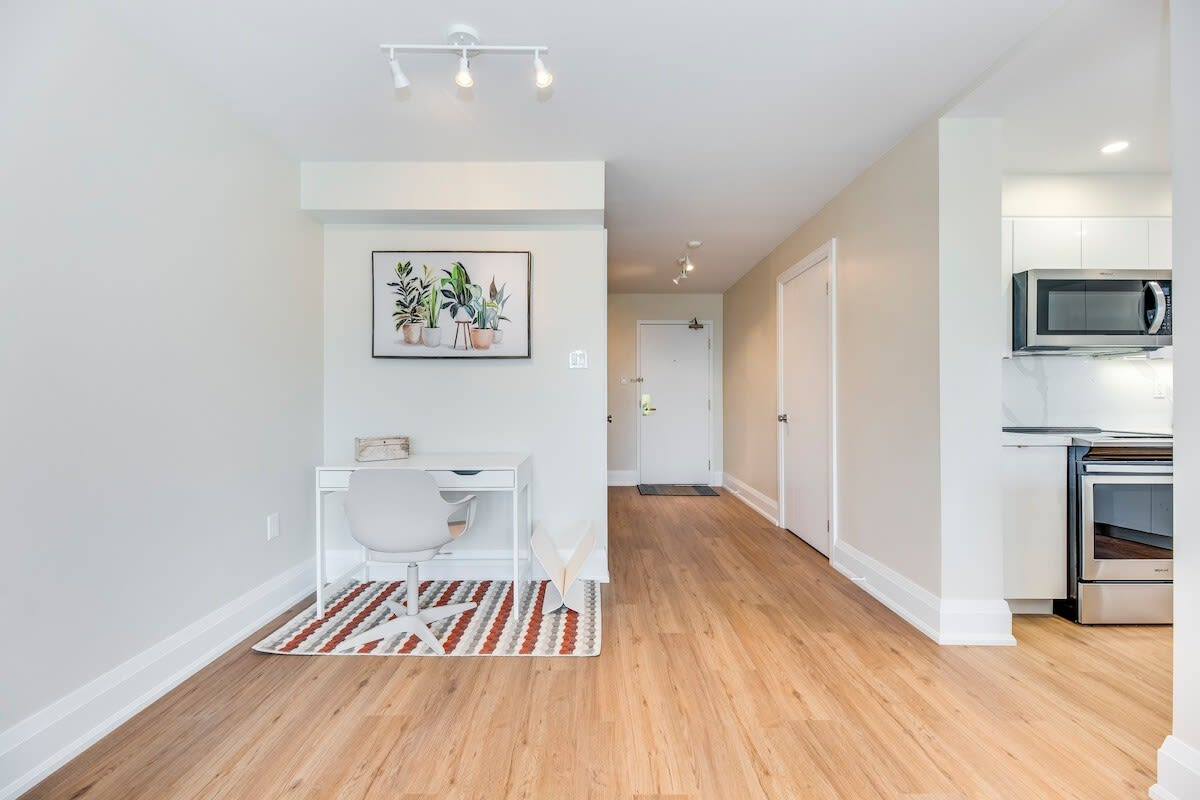
Located at the literal epicentre of the city, this suite is perfect for those who want to walk to class and have the subway at their doorstep.
1-Bedroom Furnished Rental
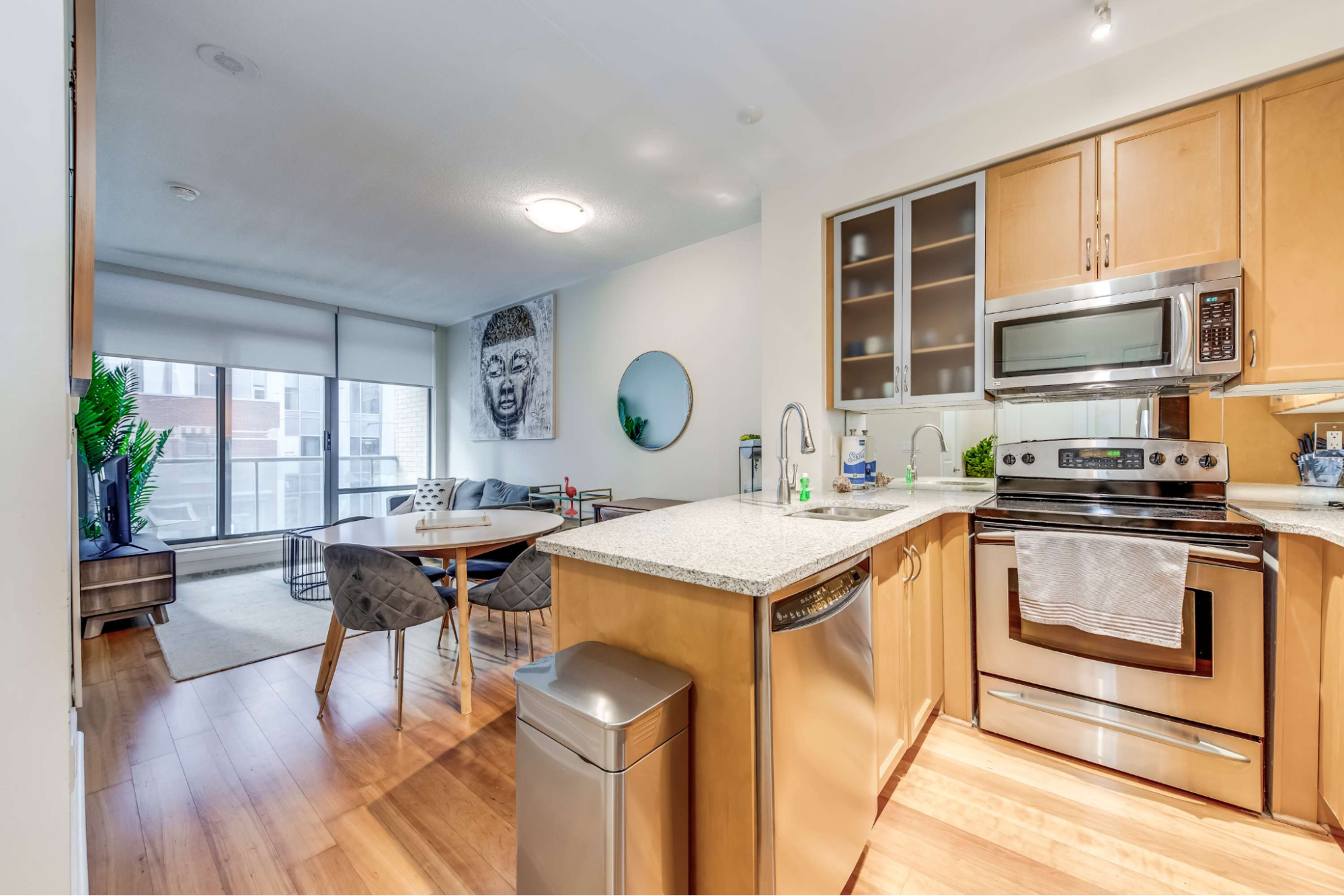
An ideal all-in-one solution for students who want to avoid the hidden costs of furnishing a bare apartment.
1-Bedroom Adelaide Executive Suite
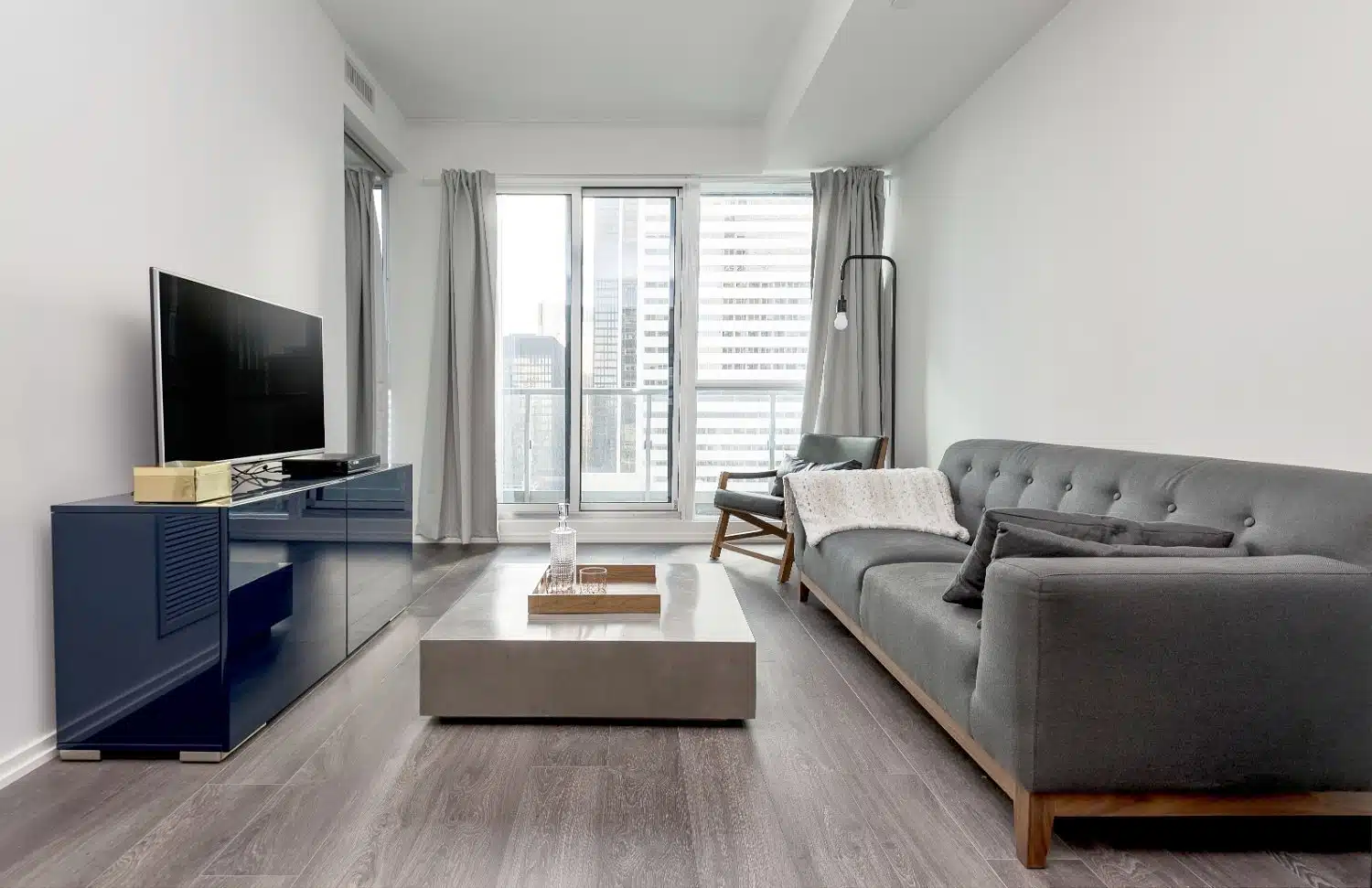
Situated in the heart of the Financial District, this is the preferred choice for graduate or business students who value a quiet, professional environment.
1-Bedroom College Furnished Rental

A versatile, modern space that places you minutes away from the Eaton Centre and major hospitals.
1-Bedroom Chic Suite Near Dundas Square
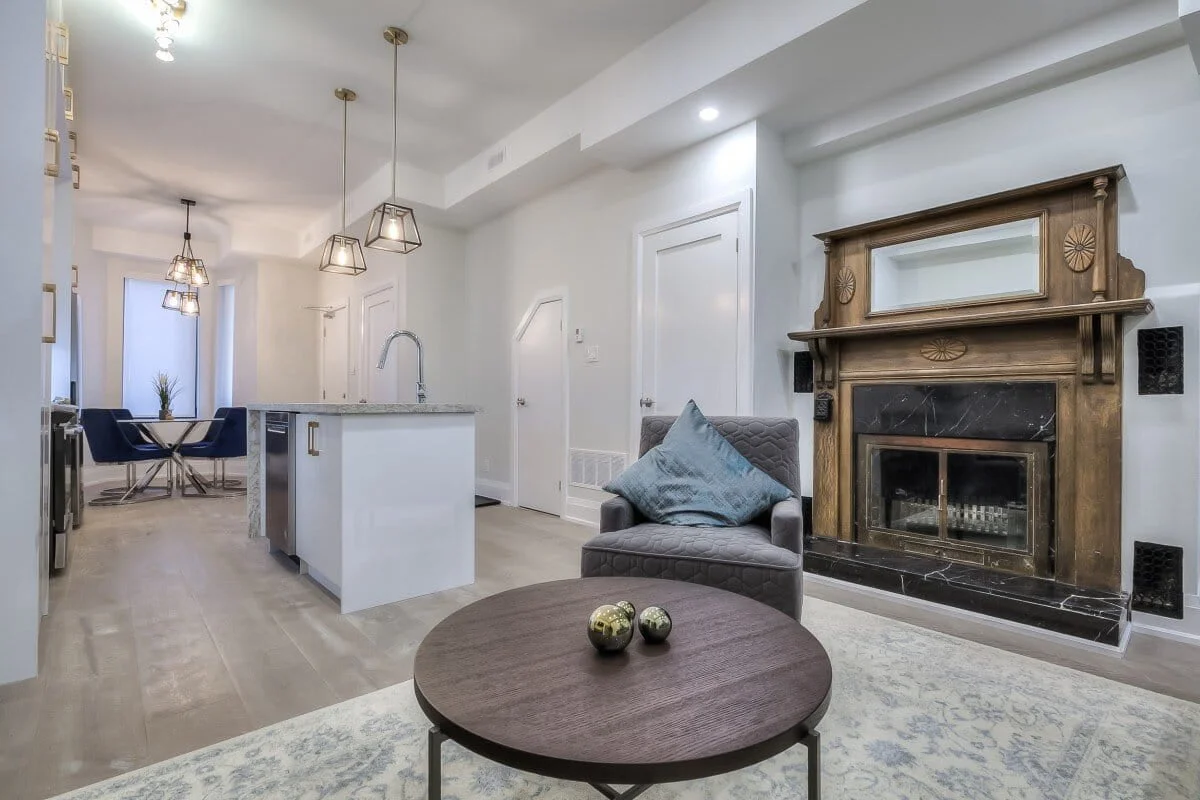
For the student who wants to be in the middle of the action, offering immediate access to Toronto’s most vibrant cultural and shopping hub.
2026 Pricing Guide - What Does Student Rent Actually Cost?
The 2026 rental landscape has shifted toward a cooling phase, but prices remain high in absolute terms. Across Canada, student rentals generally fall within the $700 to $3,000 range. While the national average asking rent has recently stabilized around $2,030, students typically occupy the lower end of this spectrum by utilizing shared housing or purpose-built units.
High-Cost Hubs - Toronto & Vancouver
- Toronto - The reality of student accommodation in Toronto is a tale of two markets. In Downtown cores near UofT or TMU, a private studio or one-bedroom averages $2,201 to $2,482. However, moving toward North York or Scarborough offers slight relief, with one-bedroom units averaging $2,119, though students often prefer shared basements in these areas for $900–$1,300.
- Vancouver - Despite a 5.7% year-over-year decline in 2026, Vancouver remains the priciest market. A one-bedroom apartment averages $2,376, forcing many students to look toward suburbs like Burnaby or New Westminster, where rapid completions of purpose-built rentals are finally driving prices down.
Value-Driven Cities - Montreal & The Prairies
- Montreal - Long considered the Student Capital, Montreal continues to offer exceptional value. In early 2026, the average price for a private room in a shared apartment is approximately $780 (approx. €525), with studios hovering around $1,275.
- The Prairies (Edmonton & Calgary) - These cities are seeing a surge in popularity due to their relative affordability. Edmonton, in particular, has seen record-high housing completions in 2025–2026, keeping room rent for students competitive at $700–$900.
2026 Rental Comparison Table
City
Avg. Shared Room
Avg. 1-BR Apartment
Monthly Transit (Student)
Toronto
$1,150
$2,201
$128 (TTC Post-Sec)
Vancouver
$1,250
$2,376
$58 (U-Pass)
Montreal
$780
$1,275
$60 (OPUS)
Calgary
$850
$1,650
$82 (Post-Sec)
Edmonton
$700
$1,410
$75 (Ride Transit)
Budgeting for International Students - Hidden Costs
When looking for rent for international students in Canada, the sticker price of the lease is only the beginning. To avoid financial stress, you must account for the following 2026 cost-of-living adjustments:
- Utilities - Unless included, expect to pay $150–$300 per month. This covers Hydro (electricity), which spikes in winter due to heating, and high-speed internet, which ranges from $60–$115.
- Groceries - Inflation-adjusted estimates for 2026 suggest a single student should budget at least $400–$500 per month for food, depending on dietary habits and where you shop (e.g., NoFrills vs. Whole Foods).
- Tenant Insurance - Most landlords in Downtown Toronto and Vancouver now require proof of insurance before handing over keys. This protects your belongings and provides liability coverage, typically costing $20–$50 per month.
- The 30% Rule - Financial experts recommend that your rent should not exceed 30% of your gross income (or total monthly budget). If you are receiving $3,500/month in support, your rent ceiling should be roughly $1,050.
For a deeper dive into market trends and to see if prices in your target city are expected to rise or fall further, consult the latest CMHC Housing Market Outlook for data-driven planning.
City Spotlight - Renting in Toronto and Montreal
Toronto Deep Dive - The Pulse of Ontario
Toronto’s rental market is a patchwork of distinct neighbourhoods. Downtown remains the most coveted area for students at the University of Toronto (UofT), Toronto Metropolitan University (TMU), and George Brown College. Living here means zero commute time, but you’ll pay a premium for the proximity. Midtown (Eglinton/Davisville) offers a slightly more residential feel with excellent subway access, while Scarborough provides more affordable houses for rent in Canada for students, though it requires a 45-60 minute commute to the core.
Given the speed of the market, many students find it impossible to secure a long-term lease from abroad. A savvy strategy is to book short-term rentals in Toronto for your first month. This allows you to inspect potential long-term apartments for students in Canada in person, avoiding catfishing and ensuring you're in a neighbourhood that suits your lifestyle.
Montreal Deep Dive - The Cultural Hub
Montreal offers a unique European flair at a fraction of Toronto’s cost. The Plateau is the artistic heart of the city, popular with McGill and UQAM students, while the Quartier Latin is vibrant and central. One unique aspect of Quebec’s market is the Lease Transfer culture; instead of signing a new lease, you can often take over an existing one from a departing student, often locking in a lower rent rate. While Montreal is a bilingual city, you’ll find that Student Montreal is very English-friendly, though learning basic French will certainly help in navigating administrative tasks.
The Hunt - How to Secure Your Lease
In 2026, the timeline for securing student rentals in Canada has shifted. January is the new April. If you are looking for a September move-in, start your research and outreach in the winter. High-demand units in the Downtown core are often snatched up within 24 hours of listing.
The International Student Package
To compete with local renters, you must have your paperwork ready. Landlords typically require:
- Study Permit and Passport.
- Proof of Funds / GIC - Essential for those without a Canadian co-signer.
- University LOA (Letter of Acceptance) - To prove your student status.
As a newcomer, you have no Canadian credit score. Use services like TenantPay or Chexy, which report your on-time rent payments to credit bureaus (Equifax/TransUnion). This allows you to build a credit score within your first six months, making future apartment hunts much easier. To find verified listings and avoid the Wild West of social media marketplaces, stick to trusted platforms.
Legal Rights & Scam Prevention
Understanding your rights is your best defence against exploitation. In Ontario, landlords are legally required to use the Ontario Standard Lease template. In Quebec, the Bail (lease) is a mandatory document that outlines the specific rights of the tenant.
Red Flags to Watch For:
- Cash-Only Demands - Never pay your deposit in cash without a signed lease and receipt.
- Too Good to Be True - If a 1-bedroom apartment in Downtown Toronto is listed for $1,200, it’s a scam.
- No Walkthrough - Never rent an apartment without seeing it (or having a trusted friend/service see it) via a live video call or in person.
What is a Legal Deposit?
- Ontario - Landlords can only ask for the first and last month’s rent. Security or damage deposits are strictly illegal.
- Quebec - Landlords cannot require a security deposit or the last month’s rent in advance, though they can ask for the first month’s rent upon signing.
By staying informed and prepared, your transition into the Canadian academic world will be defined by your success in the classroom, not by stress in your living room.
Frequently Asked Questions (FAQs)
1. Can a landlord ask me for several months of rent up front if I have no Canadian credit history?
Legally, no. In provinces like Ontario, a landlord can only require the first and last month’s rent. While some students offer more to secure a competitive unit, landlords cannot demand it. Instead, provide a Newcomer Package with your University Letter of Acceptance (LOA) and proof of your GIC or bank balance to demonstrate financial reliability.
2. Is tenant insurance mandatory for student rentals in 2026?
While not a law, almost all professional landlords and high-rise condos in Downtown Toronto and Vancouver now make tenant insurance a requirement of the lease. At approximately $20–$40/month, it is a small price to pay to protect your belongings and provide liability coverage in case of accidental damage.
3. What is the difference between Furnished and Unfurnished long-term costs?
Furnished apartments often have a higher monthly sticker price (approx. 15–20% more), but they eliminate the massive upfront cost of buying furniture, mattresses, and kitchenware, which can exceed $3,000 for a newcomer. For students staying 12 months or less, furnished boutique suites usually offer better overall value and a stress-free move-out.
4. What should I do if my landlord refuses to use the Standard Lease?
In Ontario, the Ontario Standard Lease is mandatory for most private tenancies. If a landlord uses their own informal document, you have the right to request the standard version. If they refuse, it is a major red flag for a potential scam or a landlord who does not intend to follow provincial safety and maintenance laws.
5. How early should I start looking for a September move-in?
The Goldilocks zone for searching is 3–4 months in advance. By January or February, you should be researching neighbourhoods and pricing. By May, you should be ready to sign. Waiting until August in a city like Toronto often results in settling for lower-quality housing at an inflated desperation price.
Conclusion
Securing the right student accommodation in Canada is a balance of early preparation and market awareness. As we move through 2026, the key to a successful stay is staying ahead of the curve - start your search at least four months early, budget for the hidden extras like tenant insurance and winter utilities, and never sign a document that isn't a provincial standard lease.
By prioritizing your legal rights and focusing on verified, central locations, you ensure that your time in Canada is spent focusing on your studies rather than your housing. For those seeking a safe, premium, and central soft landing in the city, exploring boutique, verified listings is the best way to guarantee your first Canadian home is a success.
Ready to find your perfect home? Explore our exclusive student-friendly suites in Downtown Toronto and secure your 2026 rental today!
Furnished monthly rentals Toronto · Search availability · View this page