UofT vs TMU: The Edgy 2026 Student Housing & Life Showdown

UofT vs TMU in Toronto — rankings, student life, career vibes, costs, transit, and where to actually live near each campus. An honest 2026 guide.
Choosing between the University of Toronto (UofT) and Toronto Metropolitan University (TMU) is a little like choosing between two excellent coffees that both cost more than you'd like and will, somewhere around midterms, keep you up at night. Both are genuinely great. Both will humble you. The real decision isn't a number on a ranking table — it's the kind of city you want wrapped around your degree, and, crucially, where you'll sleep after an 11 p.m. group-project meltdown. So here's the honest 2026 guide nobody handed you at orientation.
The 30-second verdict (for people who skim)
Short version: pick UofT if you want global academic prestige, a campus that looks like the set of a wizard film, and you don't mind being one of roughly 90,000 students. Pick TMU if you want a downtown-integrated, career-first vibe where your classroom, your internship, and your dinner are all within three blocks. Now the longer version — because your tuition deserves more than a tweet.
- Prestige & research firepower: UofT, comfortably.
- Hands-on, career-ready programs: TMU punches well above its ranking.
- Campus charm: UofT (ivy, quads, the whole brochure).
- Downtown convenience: TMU lives inside the action at Yonge-Dundas.
- Cheaper to live near: honestly a coin toss — both will gently relieve you of your savings.

Academics and reputation (the part your parents will Google)
UofT is Canada's academic heavyweight — consistently a top-25-ish university worldwide, with research clout, fierce admission standards, and three campuses (St. George downtown, plus Scarborough and Mississauga). It's strong almost everywhere, but especially medicine, law, engineering, the sciences, and business through Rotman. TMU (formerly Ryerson, renamed in 2022) leans applied and career-forward: journalism and media, the Ted Rogers School of Management, engineering, fashion, image arts, and the DMZ startup incubator that has launched a small army of founders.
The blunt way to put it: UofT will teach you to cite; TMU will teach you to ship. Rankings genuinely matter for grad school and a few prestige-obsessed employers. But in Toronto's actual job market, a portfolio, a co-op, and a network tend to out-earn a single line on a ranking spreadsheet. Pick the program, not just the logo.
Which school wins for your major?
If you're choosing by program rather than vibes, the picture sharpens quickly. UofT dominates research-heavy fields — medicine, law, life sciences, theoretical engineering, and finance recruiting through Rotman. TMU owns applied, portfolio-driven paths: journalism, film, fashion, image arts, architecture, and entrepreneurship through the DMZ incubator. Neither school is 'better' in the abstract; they're built for different kinds of careers.
- Engineering: UofT for research prestige; TMU for applied, industry-connected streams.
- Business: Rotman (UofT) for consulting/finance pipelines; Ted Rogers (TMU) for hands-on, downtown-connected business.
- Media & arts: TMU is the clear pick — journalism, RTA, fashion, image arts.
- Computer science / tech: both strong; UofT for theory and research, TMU for practical and startup culture.
- Health sciences: UofT and its hospital affiliates are hard to beat.
Campus and location: castle vs command centre
St. George is the platonic ideal of a campus — a college system (Trinity, Victoria, University College, and more), Gothic buildings, Hart House, leafy quads, and Queen's Park next door. It feels like a self-contained town wedged between the Annex and downtown. The squirrels are bold, well-fed, and frankly more confident than some landlords.
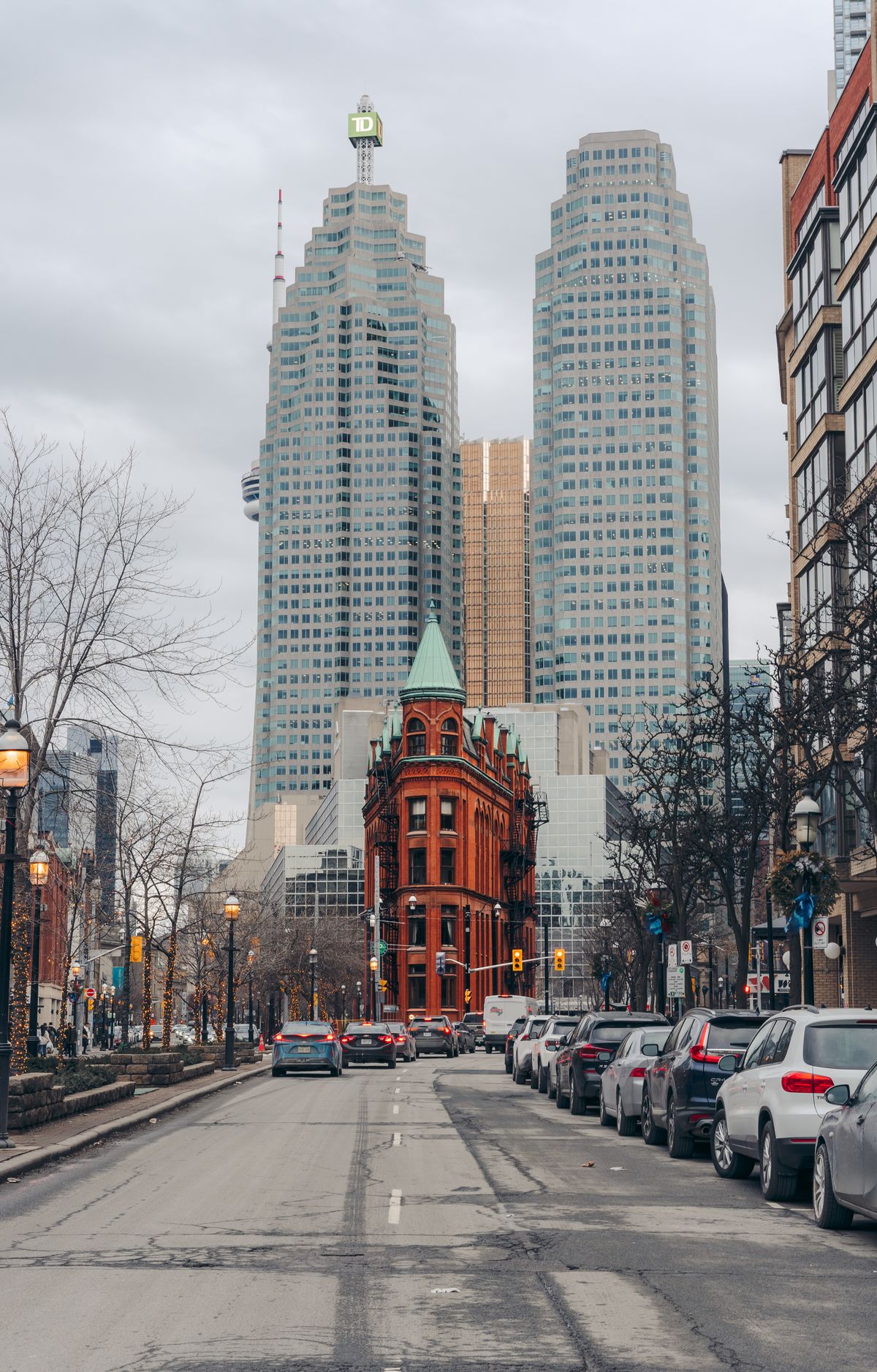
TMU doesn't really do leafy quads. Its campus is stitched directly into downtown around Yonge-Dundas (now Sankofa Square): the glassy stepped Student Learning Centre, the old Maple Leaf Gardens reborn as the Mattamy Athletic Centre, and a campus where the line between 'school' and 'city' basically doesn't exist. One feels like an escape from the city; the other feels like the city handed you a student card.
Student life and the commuter-school reality
Here's the part the tours skip: both schools are heavily commuter-driven. A lot of students train in from the suburbs, which means a social life takes deliberate effort rather than just happening to you. UofT has 1,000+ clubs and a college system that doubles as a built-in friend group; Hart House, frosh week, and faculty events give the social scene a structure. TMU feels younger, more social-media-fluent, and has downtown nightlife at its doorstep — though commuter students there are pretty candid that it can feel lonely if you treat campus like a place you only visit for lectures.
Universal advice for either school: join exactly one club that isn't just resume decoration. Making friends in Toronto is a contact sport, and 'I'll meet people in class' is the academic equivalent of 'we'll fix it in post.'
The money talk: tuition and residence
Domestic tuition at both schools generally lands somewhere in the rough range of $7,000–$14,000 per year depending on the program (professional faculties run higher). International tuition is a different planet — commonly $40,000–$65,000+ per year. Residence with a meal plan typically runs around $15,000–$23,000 for the school year at either school, and here's the catch nobody enjoys: residence is usually only quasi-guaranteed for some first-years. After year one, you're apartment-hunting with everyone else.
- Domestic tuition (rough, program-dependent): ~$7,000–$14,000/yr.
- International tuition: commonly ~$40,000–$65,000+/yr.
- Residence + meal plan: ~$15,000–$23,000 for the academic year.
- Your meal plan will also introduce you to the concept of paying $14 for adequate pasta.
Where students actually live near each campus
This is the part most 'UofT vs TMU' articles forget — they argue about acceptance rates and then leave you to figure out the small detail of, you know, shelter. Near UofT St. George, students cluster in the Annex (big Victorians chopped into units, the classic student turf), Harbord Village, Koreatown, Bloor West, and Kensington Market — which is loud, iconic, and smells like incense and opportunity. Near TMU, look at the Church-Yonge corridor, the Garden District, St. Lawrence, the edges of Cabbagetown, and the Bay-corridor condos; head east toward Leslieville if you want quieter nights and a slightly gentler rent.
Rough rent ranges near each campus (2026)
Numbers move fast, but as a planning frame for 2026: shared rooms near UofT St. George often land around $1,100–$1,400/month; one-bedrooms in the Annex or Harbord Village commonly run $2,200–$2,800. Near TMU, shared rooms along Church-Yonge can be similar, while one-bedrooms in the Garden District or St. Lawrence often sit around $2,100–$2,600. East toward Leslieville or Cabbagetown fringes, you might shave a few hundred off — emphasis on might.
- UofT Annex / Harbord: shared room ~$1,100–$1,400; 1BR ~$2,200–$2,800.
- UofT Kensington / Koreatown: similar, with more variability in older buildings.
- TMU Church-Yonge / Garden District: shared ~$1,100–$1,400; 1BR ~$2,100–$2,600.
- TMU east (Leslieville fringes): often slightly cheaper, longer streetcar commute.

Student-housing searches in Toronto spike every August, listings vanish within hours, and guarantor requirements are common — so start early. For the full playbook, see our ultimate guide to student rentals in Canada, and if you're arriving from overseas, the guide for international students covers credit, guarantors, and scams.
Residence vs off-campus furnished rentals
Residence is convenient in first year and terrible value forever after. Off-campus unfurnished means a furniture scramble, a utilities setup, and roommate negotiations that test friendships. A long-term furnished rental splits the difference: furniture, Wi-Fi, and utilities bundled for the school year, so you're not assembling an IKEA wardrobe at 1 a.m. the night before classes start. It's especially sane for international students and anyone whose idea of 'fun' does not include reading a hex-key diagram.
Want a turnkey place near campus? Browse furnished rentals in Toronto — and when the all-nighters begin, our guide to Toronto's late-night study spots will keep you caffeinated and conscious.
Transit and getting around
Good news for the car-free: both campuses are absurdly transit-rich. UofT St. George sits between Line 1 and Line 2 (St. George, Museum, Spadina, Queen's Park, and Bay stations are all within a stroll), while TMU is basically on top of Dundas Station on Line 1, with the 505 streetcar running past the door. You almost certainly do not need a car downtown — parking will cost more than your soul and the streetcar will judge you for trying. Grab a Presto card, accept that the TTC has moods, and budget for the occasional late-night Uber when the subway clocks out.
Commute times from typical student neighbourhoods: Annex to UofT St. George is often a 10–15 minute walk or a two-stop subway ride. Church-Yonge to TMU is frequently under 10 minutes on foot. If you're comparing schools by commute from the same apartment, you're usually choosing between 'short walk' and 'slightly longer walk' — not a life-altering transit saga. The bigger variable is rent, not ride time.
So which should you pick?
Pick UofT if you want academic intensity, global brand recognition, and you're at peace with wearing a backpack until age 30. Pick TMU if you want downtown in your bloodstream, hands-on programs, and you can treat construction noise as ambient study music. Pick neither if you assumed rent would be cheap — this is Toronto, not a fairy tale. Whichever you choose, the degree opens doors; the neighbourhood you live in decides whether you actually enjoy the four years it takes to walk through them.
Frequently asked questions
Is UofT harder to get into than TMU?
Generally yes — UofT's admission averages and program competitiveness tend to run higher, especially for engineering, life sciences, and Rotman commerce. That said, several TMU programs (image arts, journalism, performance, some engineering streams) are very competitive and portfolio- or interview-based, so 'easier to get into' depends heavily on the specific program.
Is TMU still called Ryerson?
No. Ryerson University was renamed Toronto Metropolitan University in 2022. You'll still see 'Ryerson' on older signage, alumni references, and the occasional confused relative.
Which school is better for business, engineering, or media?
Roughly: UofT for research-driven engineering and finance/consulting recruiting through Rotman; TMU for applied media, journalism, fashion, and entrepreneurship (the DMZ is a real advantage). For business specifically, both are strong but aimed at different vibes — prestige pipeline vs hands-on and downtown-connected.
Where do most UofT and TMU students live?
UofT St. George students gravitate to the Annex, Harbord Village, Kensington, Koreatown, and Bloor West. TMU students cluster along the Church-Yonge corridor, the Garden District, St. Lawrence, and Bay-corridor condos, drifting east toward Cabbagetown and Leslieville for quieter, slightly cheaper options.
Is it cheaper to live near UofT or TMU?
It's close. Both sit in pricey downtown rental zones. TMU's east-side fringes (toward Cabbagetown/Leslieville) and UofT's western edges (toward Bloor West/Koreatown) tend to be marginally gentler on the wallet than the core. Furnished long-term rentals can actually save money once you factor in furniture, utilities, and internet you'd otherwise buy separately.
Are the campuses safe at night?
Both downtown campuses are busy and generally safe, with campus security and well-lit main routes. Standard big-city habits apply: stick to main streets late at night, use the TTC Blue Night network, and keep an eye on your laptop in cafés. TMU's downtown-core location means more late-night foot traffic; UofT's quieter quads can feel empty after dark.
Ready to lock in a place before the August stampede? Browse long-term furnished rentals near campus and skip the move-in furniture scramble entirely.
Furnished monthly rentals Toronto · Search availability · View this page