Short-Term vs Long-Term Rentals in Toronto: 1 Month, 3–11 Months, and 12+

Short-term vs long-term rentals in Toronto compared: what each costs in 2026, furnished or unfurnished, and which suits a 1 to 11 month stay. Search now.
Toronto does not have one rental market. It has three, they barely speak to each other, and most people find that out the hard way, usually after messaging a Kijiji landlord about a two-week stay and receiving a reply that reads like a restraining order. If you are searching for a short term rental Toronto stay, a 3 month rental Toronto contract, or a long term rental Toronto lease, you are not shopping the same product. The furniture, the price, the legal rules, and even the websites are different.
This is the 2026 field guide to all three stay lengths. Toronto Boutique Apartments books furnished stays from one to 11 months with a 30-day minimum, the band this guide goes deepest on. We still compare sub-28-day and 12-month options so you know what you are not buying.
Short-term means under 28 consecutive days. That is the City of Toronto's own line, and it decides which rules apply to your stay. The city defines a short-term rental as all or part of a dwelling unit rented out for less than 28 consecutive days in exchange for payment, and any stay of 28 days or more falls outside those rules.
Short-term vs long-term rentals in Toronto at a glance
- Short-term: under 28 consecutive days, almost always furnished. Think Airbnb, Vrbo, Booking.com, hotels. Extra city registration and Municipal Accommodation Tax rules apply.
- Medium-term: 1 to 11 months, the 1 month rental, 3 month rental, 6 month lease, and month to month rental people actually type into Google. Usually furnished, often all-inclusive. This is corporate housing and temporary housing territory, and where Toronto Boutique Apartments focuses.
- Long-term: 12 months or more, usually unfurnished, lowest monthly rent, widest selection. Realtor.ca, Kijiji, Viewit, Rentals.ca, Facebook Marketplace.
- Stay under 12 months and the furnished premium often wins once you price furniture, delivery, and hydro setup. Stay past 18 months and an empty unit almost always wins on total cost.
| Short-term | Medium-term | Long-term | |
|---|---|---|---|
| Stay length | Under 28 days | 1–11 months | 12+ months |
| Furnished? | Almost always | Usually | Usually not |
| Monthly cost | Highest | 20–40% premium | Lowest |
| Where to search | Airbnb, Vrbo, Booking, hotels | Toronto Boutique Apartments, corporate housing, Furnished Finder | Realtor.ca, Kijiji, Viewit, Rentals.ca |
| Typical renter | Visitors, house-hunters | Contracts, relocations, 3–6 month leases | People settling in |
If that already answered your question, congratulations, you are more organized than 80% of people who land at Pearson with a suitcase and a Facebook Marketplace tab. If you want the why, keep reading.
The three stay lengths, defined like a human
Industry people love the acronyms STR, MTR, and LTR. Regular humans just want a bed that does not require an Allen key. Here is the Toronto version of the split, slightly messier than a textbook, because the city, condo boards, and Google all use different clocks.
Short-term: under 28 days, furnished
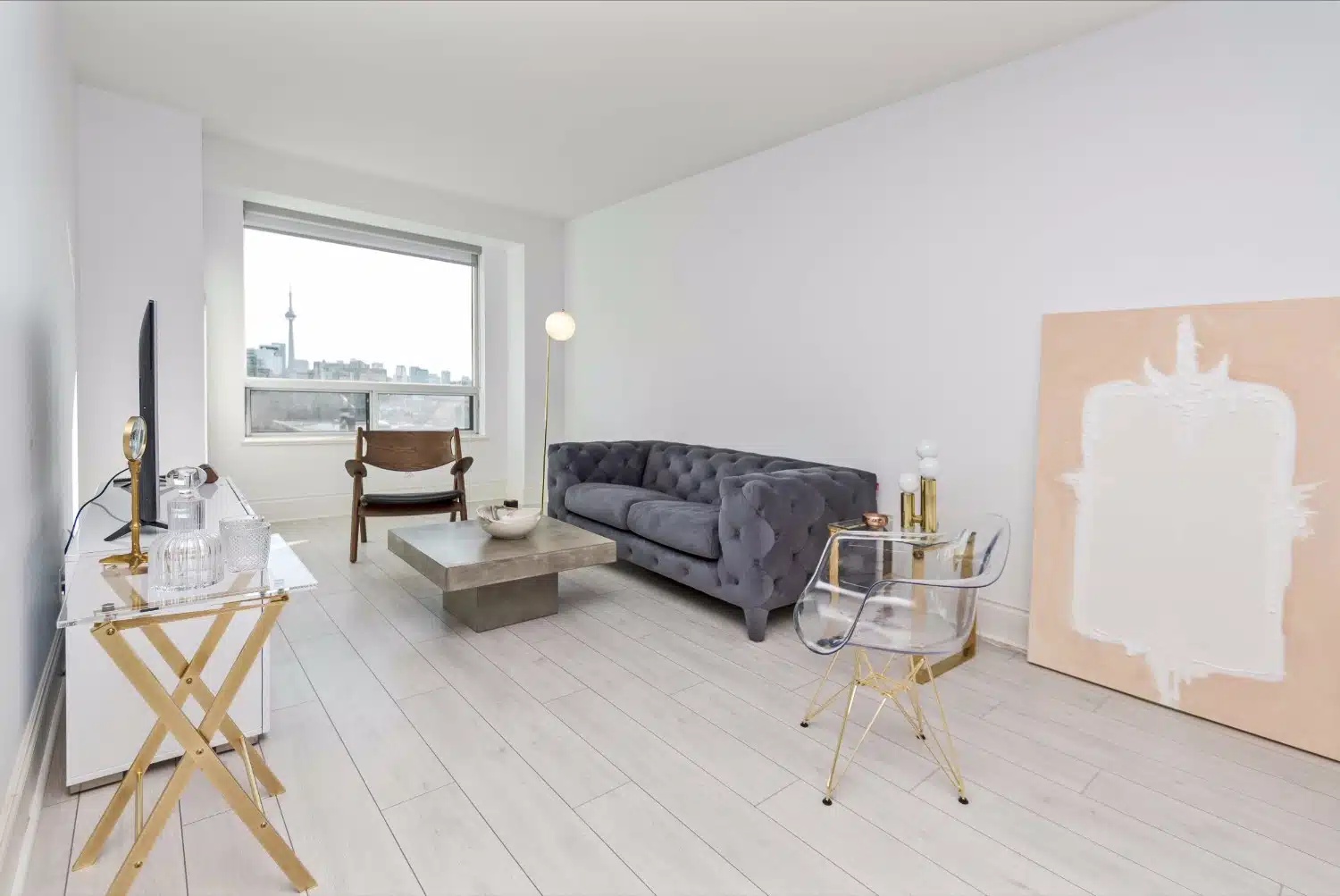
A short term rental Toronto stay is a night-to-night or week-to-week booking, almost always furnished, with towels that someone else washed. The City of Toronto legal definition is sharper: a short-term rental is all or part of a dwelling rented for less than 28 consecutive days. That 28-day line matters more than the marketing copy. Under it, operators need a city registration number, they can generally only rent their principal residence, and guests pay the Municipal Accommodation Tax, currently 6%.
Many condo corporations set their own minimum, often 30 days, which is why that charming 'available next Thursday' listing in a glass tower sometimes evaporates after the board finds out. Hotels and licensed extended stay Toronto properties sit outside that mess. Private condos do not. Toronto Boutique Apartments does not book sub-28-day stays.
If you are comparing a furnished suite to a hotel night, we already wrote that fight up in short-term rentals vs hotels in Toronto.
- Furnished: yes. You should be able to cook something more ambitious than toast.
- Utilities and Wi-Fi: usually included. Confirm it anyway, 'usually' has been sued before.
- Best for: film shoots, house-hunting weeks, conferences, visiting family who have opinions about your sofa.
- Monthly cost: highest. You are paying for flexibility, linens, and the privilege of leaving in 12 days without hiring a mover.
Medium-term: one to 11 months, usually furnished

This is the stay length Google barely has a name for. People do not search 'medium term rental Toronto', Ahrefs shows that phrase as a ghost. They search 1 month rental in Toronto, 3 month rental Toronto, 6 month lease Toronto, month-to-month furnished rentals, temporary housing Toronto, and corporate housing in Toronto. Same product, five different search boxes.
A medium-term rental is the gap between 'I am a tourist' and 'I have a favourite grocery store.' It is almost always a furnished apartment Toronto listing: bed, sofa, dishes, Wi-Fi, hydro bundled, and a lease that ends when the contract, the semester, or the renovation does. Toronto Boutique Apartments requires a 30-day minimum stay, the product we sell, which sits just outside the city's short-term bylaw. That is not a loophole so much as a different product.
Who lives here: corporate relocations, travel nurses, visiting professors, newcomers who refuse to buy a couch before they know the neighbourhood, and anyone between the house they sold and the one that is still a hole in the ground. If your employer is paying, say the words corporate housing Toronto out loud, inventory and credit flexibility both improve.
- Furnished: usually yes, and that is the point.
- Lease: 1, 3, 6, or 11 months, or a true month-to-month. Ask which form you are signing.
- Minimum stay: 30 nights at Toronto Boutique Apartments and most specialist operators.
- Best for: stays long enough that a hotel would bankrupt you and short enough that IKEA would bankrupt your patience.
- Monthly cost: a premium over unfurnished, often 20–40% in the same building, but the all-in number is frequently cheaper than buying furniture you will donate in June.
- 2026 planning range: a decent downtown or midtown one-bedroom furnished apartment often runs $3,200–$5,000+/month all-in.
Long-term: 12 months or more, usually unfurnished, cheapest by the month
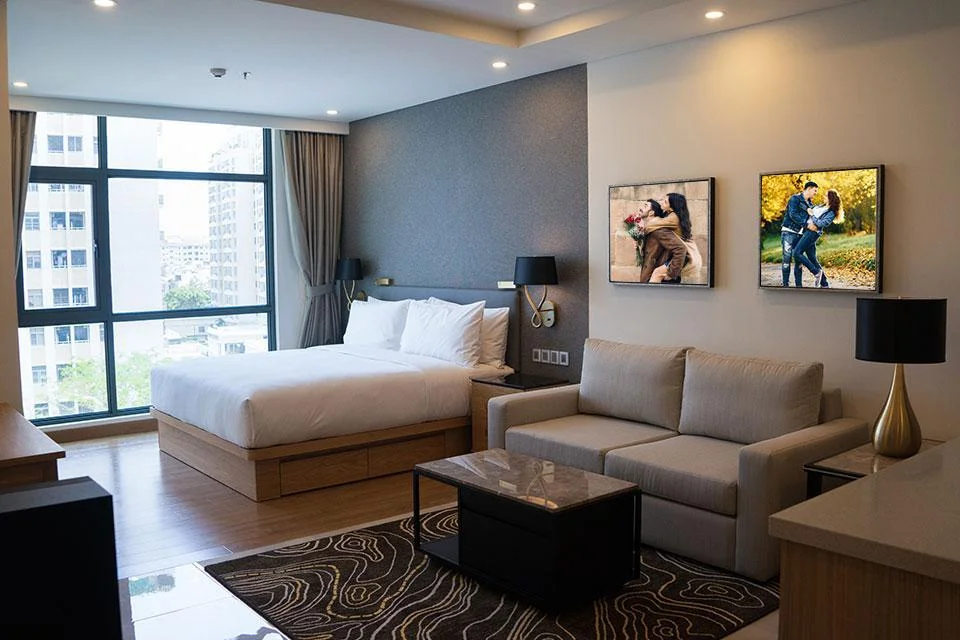
A long term rental Toronto lease is the default setting of the city: 12 months on the Ontario Standard Form, first and last month's rent, tenant insurance, and an apartment that greets you with four white walls and a fridge light. Unfurnished is the least expensive monthly rent because you are not amortizing someone else's sectional.
You also get the widest selection and, in many older buildings, Ontario rent-control protection on future increases. The trade-off is commitment. Breaking a year lease in Toronto is a sport with rules, fees, and a landlord who has heard every story about your sudden transfer to Vancouver.
If the furniture question is the only thing keeping you up, read furnished vs unfurnished in Toronto and then come back. The stay-length decision and the furniture decision are cousins, not twins.
- Furnished: usually no. 'Appliances included' means fridge and stove, not a life.
- Utilities: often extra, hydro, internet, sometimes heat. Budget $150–$300+ on top of rent.
- Best for: people staying a year or more who already own furniture, or who are ready to own furniture.
- Monthly cost: lowest. Upfront cost: highest, once you add first/last, a bed, and the moment you realize you also need a shower curtain.
Where to search: the channels for each type
This is the part most blog posts skip, and it is the part that actually saves you a weekend. Searching Realtor.ca for a 10-night stay is like searching Uber Eats for a mortgage. Wrong aisle.
Short-term channels (under one month)
- Airbnb, Vrbo, and Booking.com, the default for nights and weeks. Look for a visible City of Toronto registration number.
- Hotels and branded extended-stay properties, boring, legal, and surprisingly competitive once you add cleaning fees and MAT to a private listing.
- Direct boutique operators, a handful of furnished-suite companies will take under 28 days in buildings that allow it. Confirm the condo rules in writing.
- Skip: Kijiji and Facebook Marketplace for anything under a month unless you enjoy adventure tourism.
Medium-term channels (1 to 11 months)
This is Toronto Boutique Apartments's home turf: furnished apartments with utilities, booked for a month or several, without the 'please assemble this bed before your 7 a.m. shift' energy. Other places people actually find a 3 month rental Toronto or 6 month lease Toronto:
- Furnished rental specialists and corporate housing Toronto providers (Toronto Boutique Apartments, suite companies, relocation firms).
- Airbnb and Vrbo filtered to monthly stays, prices often drop after 28 nights, and the listing exits the city's short-term tax bucket.
- Furnished Finder, especially for travel nurses and travelling healthcare contracts.
- Kijiji and Facebook Marketplace, some genuine furnished month-to-month ads, mixed with a carnival of scams. Video tour or no deposit.
- Rentals.ca and Padmapper, weaker for furnished, but the occasional 4–8 month sublet shows up.
Relocating on a deadline? urgent relocation housing in Toronto is the sibling guide. Healthcare contract? Start with furnished apartments for travel nurses.
Long-term channels (12+ months, usually unfurnished)
- Realtor.ca, the closest thing Toronto has to an official bulletin board. Most unfurnished year leases live here.
- Kijiji and Viewit, volume kings. Also the natural habitat of 'too good to be true' one-bedrooms in Yorkville for $1,400.
- Rentals.ca, Padmapper, and Facebook Marketplace, useful, noisy, and worth a saved search.
- A licensed realtor, free to you as a tenant in most cases, because the landlord pays. Handy if you are searching from another country.
- Building websites and waitlists, older rent-controlled stock rarely lasts a full public listing cycle.
Long-term is the least 'specialist' market and the most time-consuming one. That is the deal: you pay less per month and more in evenings spent refreshing a map.
What each type actually costs in 2026

Numbers move, neighbourhoods argue, and anyone quoting a single 'Toronto rent' is selling something. Treat these as 2026 planning ranges for a decent downtown or midtown one-bedroom, not a promise from the universe.
- Short-term furnished: often $150–$350+ per night before fees and MAT, or a painful weekly total that makes a monthly suite look like a public service.
- Medium-term furnished apartment Toronto: commonly $3,200–$5,000+/month all-in for a one-bedroom, depending on neighbourhood, finishes, and whether the listing is actually corporate-grade or just a sofa and a hope.
- Long-term unfurnished: a downtown one-bedroom frequently lands around $2,300–$2,800+, more in Yorkville and the waterfront, less as you ride the subway toward the words 'convenient bus connection.'
- Furnished premium vs unfurnished in the same building: plan on roughly 20–40%. A $2,800 empty one-bed becoming $3,500–$3,900 furnished is a normal plot twist.
Do the ugly math. Buying a bed, sofa, desk, dishes, lamps, and a reasonably non-tragic coffee table in Toronto, plus delivery, plus two months of hydro and internet setup, happily eats $1,500–$4,000. If you are leaving in six months, that 'cheap' unfurnished lease was a very expensive storage unit you also slept in.
Rule of thumb that keeps showing up in the market: under 12 months, furnished usually wins on total cost and sanity. Past 18 months, unfurnished usually wins unless your employer is paying or you refuse to own a nightstand on principle.
Toronto rules that change which type you can even book
Stay length is not just a vibe. It is a bylaw, a condo declaration, and occasionally a landlord who watched a webinar.
- Under 28 consecutive days: City of Toronto short-term rental rules apply, principal residence only, operator registration, Municipal Accommodation Tax. If the listing has no registration number, you are the enforcement department's group project.
- Condo boards: many buildings forbid stays under 30 days even when the city would allow a registered host. A landlord cannot secretly outvote a corporation.
- 28–364 days: this is the medium-term grey area the city itself has written about. It is not a hotel and it is not a classic year lease. Read what you sign.
- Residential Tenancies Act: if you are renting a whole unit and not sharing a kitchen or bathroom with the owner, the RTA usually applies. A lease that says 'the RTA does not apply' is a red flag, not a personality. The Act is not a coupon you can decline.
- Deposits: in Ontario a landlord can take first and last month's rent, not a separate damage deposit, not three months 'for international tenants' unless you volunteered that as a strategy.
Rent control on the long-term side is its own rabbit hole, start with whether the unit is protected by Ontario rent control before you fall in love with a 2019 glass box.
Which one is right for you
Ignore the branding. Answer three questions: how many nights, do you already own furniture, and who is paying.
- Under 28 days, no furniture, someone else's credit card: short-term. Book a registered listing or a hotel and go outside.
- 1–11 months, no furniture, work or school has an end date: medium-term furnished. This is the 1 month, 3 month, and 6 month lease lane.
- 12+ months, you have a sofa in storage or a budget to buy one: long-term unfurnished. Lowest monthly, highest IKEA exposure.
- 12+ months, you have no furniture and no desire to acquire a personality through throw pillows yet: a furnished long-term or an 11-month furnished stay while you learn the city. Newcomers do this on purpose.
- You do not know how long you will stay: do not sign a year to 'keep options open.' Options are what month-to-month and 3-month furnished leases are for.
A six-month tech contract, a medical residency block, a sold house with a delayed closing, an international student who wants one term before committing to a roommate, those are medium-term stories. A couple moving from Vancouver with a truck and a cat is a long-term story. A cousin here for TIFF is a short-term story. Mixing them up is how you end up buying a couch for a 19-day stay.
How to avoid the usual disasters
- Do not send an e-transfer for a unit you have not walked through or video-toured live. Toronto scammers are unionized at this point.
- If a short-term listing is in a condo and cheaper than a Motel 6, ask for the city registration number and the building's rental-by-law. Silence is an answer.
- Get a furniture inventory with photos on any furnished stay. 'The vase was already broken' is a tale as old as last month's tenant.
- On long-term leases, use the Ontario Standard Form. Custom PDFs from a 'property group' you cannot Google are modern folklore.
- Price the all-in number: rent + utilities + internet + furniture + deposits + the Uber you will take when the '10-minute walk to the subway' is a 22-minute walk in January.
For the full horror-story prevention kit, see how to avoid common rental scams in 2026.
Frequently asked questions
What is a short term rental in Toronto?
In city law, renting all or part of a home for less than 28 consecutive days, see the City of Toronto definition. In everyday marketing, people often say 'under a month.' Condo rules and taxes care about the legal 28-day line.
Can I rent an apartment in Toronto for 1 month or 3 months?
Yes, that is a medium-term furnished rental, not a classic year lease. Search 1 month rental Toronto or 3 month rental Toronto on furnished-suite sites, corporate housing providers, and monthly Airbnb filters. Traditional landlords advertising on Realtor.ca will mostly say no. For the 30-day version, see how a 1 month rental in Toronto works.
What is temporary housing in Toronto?
Temporary housing Toronto usually means a furnished apartment you can take for weeks or a few months while you relocate, renovate, or wait out a work contract. It overlaps with corporate housing and with 1 month / 3 month rentals, not with a 12-month unfurnished lease.
Is a 6 month lease possible in Toronto?
Yes, mostly in the furnished and corporate-housing market. A standard unfurnished landlord can agree to six months, but most will not, because they can fill a 12-month lease without the extra turnover. If you need a 6 month lease Toronto, start furnished.
Are month to month rentals common in Toronto?
After a fixed term ends, many long-term tenancies roll to month-to-month under the RTA. Starting month-to-month from day one is less common on empty units and more common on furnished temporary housing. Ask which world you are entering before you pack.
Why is a furnished rental more expensive than unfurnished?
You are paying for furniture amortization, faster turnover, utilities, internet, and someone who replaces the broken blender. In the same building the gap is often 20–40%. Whether that is 'expensive' depends on how long you stay and whether you already own a mattress.
Where should I look for corporate housing in Toronto?
Specialist furnished operators, relocation firms, and monthly filters on the big booking sites. Corporate housing in Toronto inventory is built for employers: invoices, flexible dates, and a unit that does not require a Saturday at IKEA North York.
Is long-term always cheaper?
By the month, yes. By the stay, not always. A year of unfurnished rent plus furniture you will keep is cheap. Four months of unfurnished rent plus furniture you will sell at a loss is a hobby.
Do I need to worry about the Municipal Accommodation Tax?
Only if the stay is under 28 consecutive days. Platforms often collect it for you. On a 30-day or longer furnished rental it generally does not apply, one reason a monthly rate can look suddenly reasonable compared with four weekly Airbnb checkouts.
Book the stay that matches the calendar
If your Toronto dates have an ending, a contract, a semester, a closing date, a 'we'll see after the summer', you want a furnished place with the utilities already on. If your dates look like a life, you want a year lease and a budget for a bed that is not also a couch.
Browse furnished monthly rentals Toronto for one-month to long-stay suites, or keep reading tips for furnished rentals before you sign. And if someone offers you a two-week condo for cash because 'the board is chill,' the board is not chill. The board has a lawyer.
Furnished monthly rentals Toronto · Search availability · View this page